
How We Measure Video ROI: Metrics That Matter for Councils and SMEs
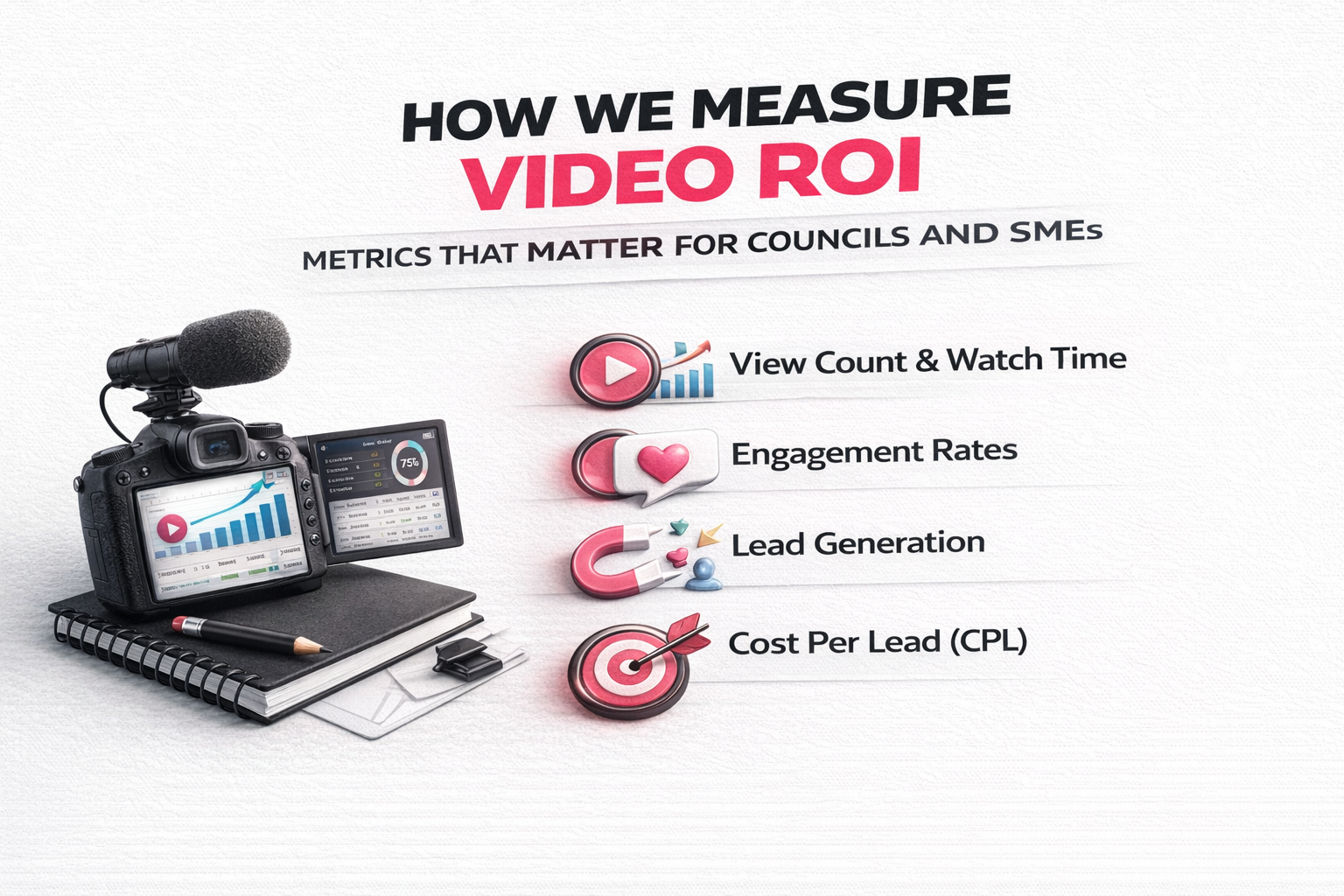
For councils, public sector organisations, and SMEs, commissioning video is rarely about creativity alone. It’s about accountability.
Budgets must be justified.
Outcomes must be clear.
And decisions must stand up to scrutiny.
Yet one of the most common concerns we hear when organisations consider professional video is the following:
“How do we actually measure the return on investment?”
At Title Productions, we work closely with councils, educational institutions, and growing organizations to ensure video is not just well produced — but measurable, defensible, and purposeful.
This article explains how we approach video ROI, which metrics genuinely matter, and why success looks different depending on the organisations and their goals.
Why Measuring Video ROI Is Different for Councils and SMEs
Video ROI is often misunderstood because it’s measured using the wrong lens.
For councils and public sector bodies, ROI is rarely about direct sales. It’s about:
Public understanding
Engagement and reach
Transparency and accountability
Behaviour change
Trust and credibility
For SMEs, ROI may include:
Lead generation
Website conversions
Brand perception
Sales enablement
Marketing efficiency
This is why a single metric — such as views — is almost never enough.
Meaningful ROI starts with alignment between the video’s purpose and the way success is measured.
Step One: Defining Success Before Production Begins
The biggest ROI mistake organisations make is waiting until after delivery to decide how success will be measured.
Before any filming takes place, we work with clients using our video media services to clarify:
What problem the video is meant to solve
Who it is meant to influence
Where it will be used
What outcome would justify the investment?
Without this clarity, even a beautifully produced video can feel disappointing — because there’s nothing concrete to measure it against.
Metric 1: Reach and Visibility (When Awareness Is the Goal)
For many councils and public-facing organisations, reach is a legitimate and necessary metric.
This includes:
Video views across platforms
Website traffic driven by video
Social media impressions
Completion rates
For public sector clients featured in our councils and government work, reach is often tied to:
Informing residents
Promoting services
Supporting campaigns
Meeting communication obligations
However, reach alone is not ROI — it’s context. The real question is whether the right audience is being reached.
Metric 2: Engagement and Watch Time
Engagement metrics provide deeper insight than raw views.
These include:
Average watch duration
Percentage viewed
Comments, shares, and reactions
Repeat views
High engagement suggests that content is:
Relevant
Clearly communicated
Well structured
Trusted
For SMEs, this often correlates with stronger brand recall and warmer leads. For councils, it can indicate whether messaging is landing or being ignored.
Videos showcased in our Our Work portfolio often demonstrate how clarity and structure directly influence engagement — not just production quality.
Metric 3: Behavioral Change and Actions Taken
One of the most meaningful ROI indicators is what viewers do after watching.
This might include:
Visiting a service page
Downloading information
Attending an event
Making an inquiry
Changing behavior
For example:
A council video may aim to increase uptake of a service.
An SME video may aim to drive contact form submissions.
An educational institution may want to improve understanding of a programme.
These actions provide tangible evidence that video is supporting real outcomes — not just visibility.
Metric 4: Internal Value and Operational Efficiency
Not all ROI is external.
Many organisations overlook the internal value of video, such as
Reduced staff time spent explaining processes
More consistent messaging
Improved internal communication
Better onboarding or training outcomes
This is especially relevant for education and higher learning and public sector teams managing complex information across departments.
When video replaces repeated meetings or documents, the return is often seen in time saved rather than revenue generated.
Metric 5: Longevity and Reusability of Content
One of the strongest ROI signals is how long a video remains useful.
Well-planned video content can be used:
Across multiple campaigns
On websites for years
In presentations and reports
Internally and externally
This is why we encourage clients to think about video as an asset, not a one-off deliverable.
Filming in controlled environments such as our Creative Studio in Manchester often supports this longevity by ensuring timeless visuals and consistent quality.
Metric 6: Stakeholder Confidence and Buy-In
For councils and public sector bodies, ROI often includes something harder to quantify — confidence.
Clear, professional video can:
Improve stakeholder understanding
Reduce misinformation
Support funding justifications
Strengthen public trust
While this may not show up immediately in analytics dashboards, it is often reflected in smoother engagement, fewer objections, and stronger alignment across teams.
For budget holders, this form of ROI is just as important as numerical metrics.
Why We Avoid Vanity Metrics
Views without context can be misleading.
A video with fewer views but higher engagement and clearer outcomes may deliver far more value than one with high reach and no action.
This is why our ROI discussions always focus on:
Purpose-driven metrics
Audience relevance
Long-term impact
Practical outcomes
Not just numbers that look good in a report.
How ROI Measurement Shapes Better Video Decisions
When organisations understand how ROI will be measured, they make better decisions about:
Video format
Length and structure
Distribution channels
Budget allocation
Frequency of production
This leads to more confident commissioning and better use of public or commercial funds.
Across manufacturing and engineering and SME clients, this clarity often results in ongoing video programmes rather than isolated projects.
Making ROI Part of the Conversation From Day One
ROI shouldn’t be an afterthought.
It should be part of the first conversation – alongside goals, audience, and constraints.
This is why our onboarding and planning process is designed to align creative decisions with measurable outcomes from the outset.

Final Thoughts: ROI Is About Relevance, Not Just Numbers
For councils and SMEs, video ROI isn’t about chasing viral success.
It’s about:
Clear communication
Responsible spending
Measurable outcomes
Long-term value
When video is planned strategically, measured appropriately, and used thoughtfully, it becomes one of the most accountable communication tools available.
If you’re considering video and need to justify the investment internally — or want to better understand how success will be measured,
Get in touch via our contact page and we’ll help you define the right metrics for your organisation, audience, and objectives.