
How Bolton Council Doubled Young Applicants With One Recruitment Video
How Recruitment Videos Attract Young Applicants
Every organisation says some version of the same thing:
“We just can't attract young people.”
Then you visit the careers page.
A stock photo of smiling employees.
A paragraph about “exciting opportunities."
A list of corporate values.
A job description long enough to qualify as light reading.
And somewhere near the bottom, a button saying Apply Now.
Then everyone wonders why a 22-year-old who spends their day consuming video doesn't immediately fall in love with a three-page PDF.
The problem may not be the jobs.
It may be the way you're introducing them.
Young candidates are not necessarily asking for some revolutionary recruitment experience. They want to know some fairly straightforward things:
What would I actually be doing? Who would I be working with? What does the place feel like? And can I see myself working there?
Text can answer some of those questions.
Video can answer them much faster.
And Bolton Council provides a particularly useful example of what can happen when an organisation stops telling young people what a job is like and starts showing them.
The recruitment problem wasn't a lack of jobs. It was a lack of connection.
Bolton Council had a challenge that will sound familiar to anyone responsible for recruitment.
People under 25 made up just over 4% of its workforce.
For an organisation serving a town with a large young population, that created a clear talent-pipeline problem.
The issue wasn't simply getting job vacancies in front of people.
The council needed young candidates to actually see the organisation as somewhere they could imagine themselves working.
And that requires something a traditional job advert often struggles to create:
connection.
A young person reading:
“We are committed to delivering high-quality services to our communities…”
doesn't necessarily learn anything about what it feels like to work there.
Who are the people?
What does the working day look like?
What sort of environment would they be entering?
Would they fit in?
Would they actually enjoy it?
Those are the questions that influence whether somebody thinks, “That sounds like somewhere I could work.”
Why traditional job adverts struggle with younger candidates
There is nothing inherently wrong with a written job advert.
You need one.
It provides the role details, salary, requirements, responsibilities and application information candidates need before making a decision.
But a job advert is designed primarily to inform.
Recruitment marketing has to do something else.
It has to persuade.
That distinction matters.
A candidate can understand a job description perfectly and still have absolutely no emotional connection to the organisation.
This is particularly important for younger candidates who may be applying for their first serious role, moving from education into employment or comparing an organisation with dozens of other employers.
They don't necessarily have years of experience to help them judge whether an employer is credible.
So they look for signals.
What do the people look like?
How do they communicate?
What does the workplace look like?
Does everyone seem painfully corporate?
Does the organisation understand people like me?
Does this feel like somewhere I'd actually want to spend my week?
A recruitment video can answer those questions before the candidate ever submits an application.
So what happened when Bolton Council tried recruitment video?
Instead of relying solely on written recruitment messaging, Bolton Council took a different approach.
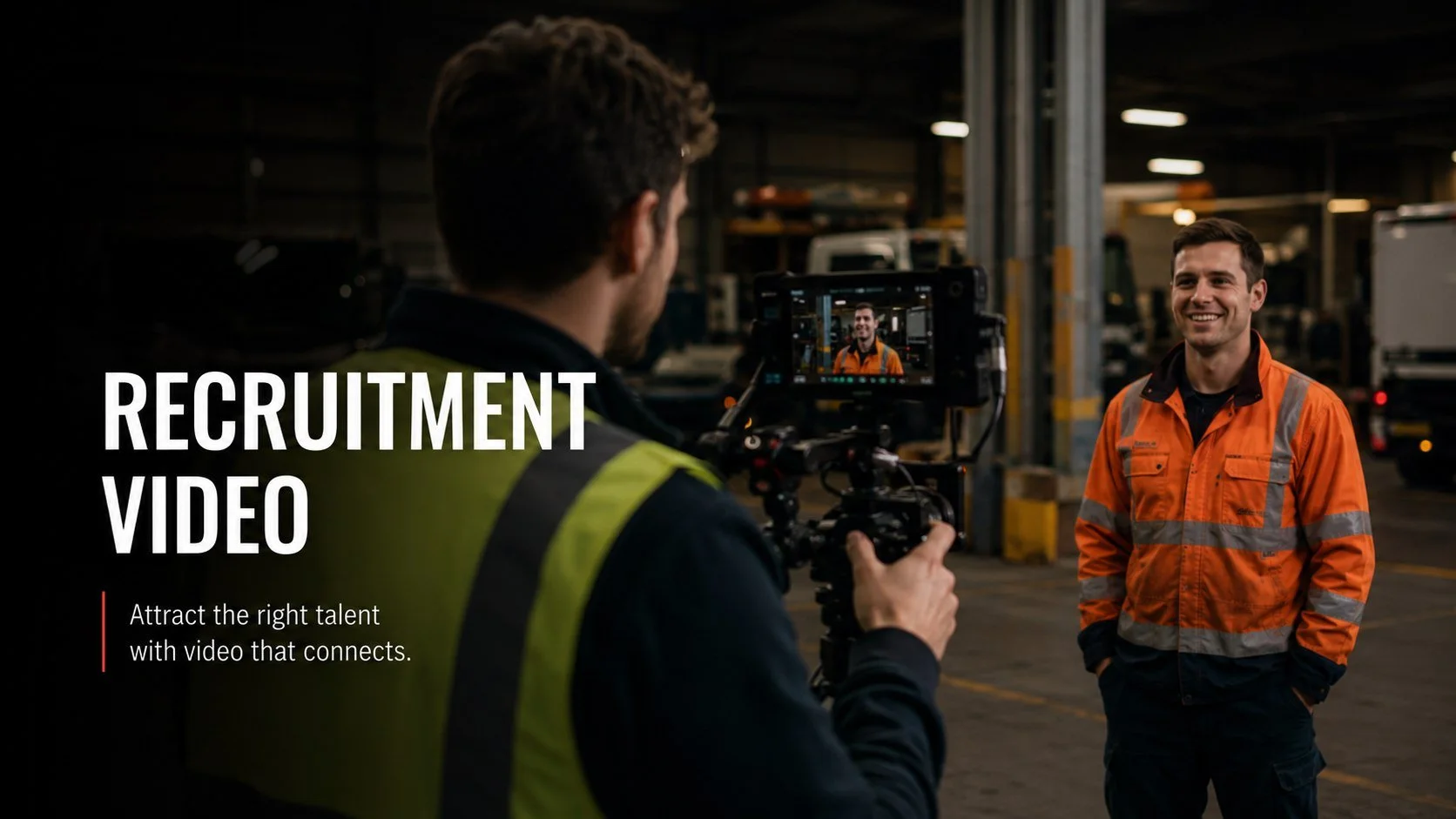
We produced a recruitment film designed specifically to help potential applicants understand what working for the council could actually look like.
The key was simple:
Real people. Real roles. Real working environments. Real answers.
There was no attempt to manufacture some glossy version of council life that candidates would immediately recognise as artificial.
The film showed the people behind the organisation and gave prospective employees a much clearer idea of what they could expect.
That changed the recruitment message from:
“Here is a job description.”
to:
“Come and see what working here is actually like.”
And the result was significant.
The proportion of under-25s in the workforce increased from just over 4% to almost 8%.
In other words, it nearly doubled.
That is a much more meaningful outcome than simply saying a video received a lot of views.
The objective wasn't views.
The objective was attracting a younger workforce.
And that is exactly the kind of metric recruitment content should ultimately be judged against.
The secret wasn't making the council look glamorous
This is important.
Bolton Council didn't need to pretend it was a tech start-up with beanbags, rooftop offices and someone permanently playing table tennis in the background.
Because that would miss the point.
Young candidates aren't necessarily looking for somewhere that looks glamorous.
They're looking for somewhere that feels real.
There is a huge difference.
A beautifully produced recruitment video can still fail if it feels staged.
If every employee is delivering perfectly rehearsed lines.
If everyone is standing in a corridor smiling at the camera.
If the workplace looks nothing like the one the candidate will actually enter on their first day.
That creates a credibility problem.
The production quality should make the organisation look professional.
The content should make it feel human.
Those are not the same thing.
Real employees are more convincing than corporate messaging.
One of the strongest elements of an effective recruitment video is hearing from the people who already work there.
Not just senior leadership.
Not just HR.
Not just the CEO explaining the company's five-year vision.
The employees.
A potential applicant wants to hear what the organisation is actually like from somebody who experiences it every day.
What do they enjoy?
What surprised them?
What does their role involve?
What is the team like?
Why did they join?
What opportunities have they had?
What does an ordinary day look like?
Those answers can be far more persuasive than a carefully written employer-branding statement.
And the employee doesn't have to sound like a professional presenter.
In fact, they probably shouldn't.
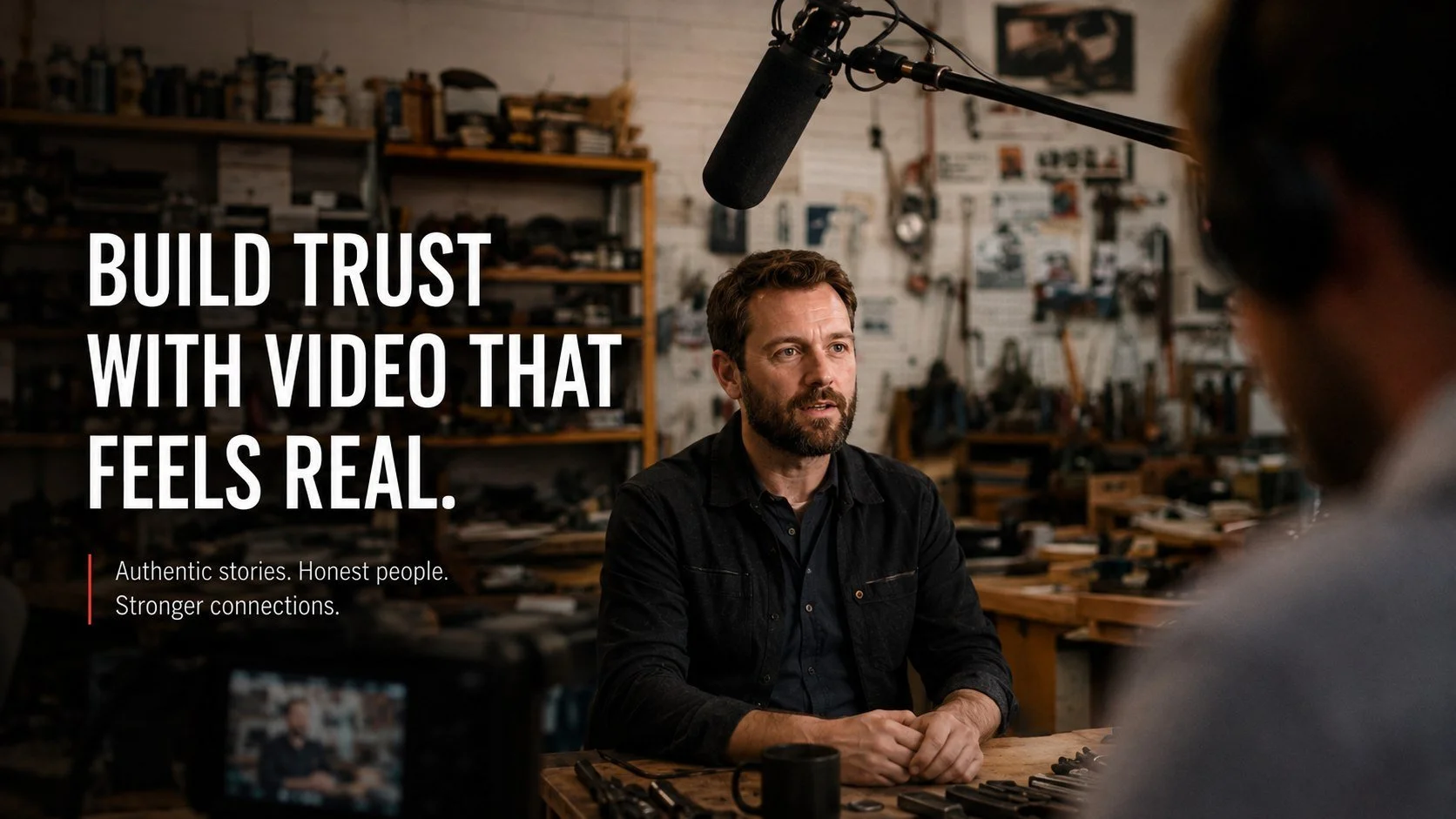
A natural conversation often creates more trust than a perfectly delivered corporate script.
Young audiences are particularly good at spotting content that feels manufactured.
If something sounds like it was written by six people in a meeting room and approved by three departments, it probably won't feel very relatable.
Show the Tuesday afternoon, not just the company brochure.
If you want to attract somebody to a job, show them the job.
It sounds obvious.
Yet recruitment content often spends more time talking about the organisation than showing the actual work.
A good recruitment film should give candidates a sense of the ordinary.
The office.
The depot.
The site.
The meeting.
The equipment.
The colleagues.
The conversations.
The actual working environment.
Not everything needs to look cinematic.
Some of the most useful footage might be the least glamorous.
Someone preparing for the day.
A team working together.
A colleague solving a problem.
A meeting taking place.
A person carrying out the role a future applicant is considering.
Those moments answer a question that a job description cannot:
“Can I picture myself doing this?”
And that is one of the most important questions in recruitment.
The person on screen matters almost as much as the message.
Imagine you're 21 and considering applying for an organisation.
You click the recruitment video.
The first person you see is a senior executive who is 25 years away from the role you're considering.
They may be brilliant.
They may be an excellent leader.
But they're not necessarily helping you visualise yourself in the organisation.
Now imagine the video introduces someone closer to your stage of career.
They explain what they do.
They talk about how they got started.
They describe their team.
They explain what they enjoy.
Suddenly the viewer has something to relate to.
This isn't about hiring people based on appearance or trying to make every employee fit a particular demographic.
It's about representation of experience.
Show people who can genuinely explain what it is like to enter and develop within the organisation.
That makes the opportunity easier to understand.
Don't make candidates search for the video.
Even a brilliant recruitment film can achieve very little if nobody sees it.
This is another mistake organisations make.
They produce a fantastic video, upload it to YouTube, put it somewhere on the careers page and assume the job is done.
It isn't.
Recruitment video content should be distributed where candidates already spend their time.
That could include:
careers pages
individual job listings
LinkedIn
Instagram
TikTok
YouTube
paid social campaigns
recruitment campaigns
university and college outreach
The exact mix depends on who you're trying to recruit.
The principle is simple:
Don't make candidates change their behaviour to discover your recruitment content.
Put the content where they already are.
That is why a single recruitment film should usually be treated as the starting point for a wider content package rather than one isolated video.
One recruitment shoot can create months of content.
This is where the economics become interesting.
You don't necessarily need to commission a completely new film every time another vacancy appears.
A well-planned production can create a central employer-brand film and then generate smaller pieces of content around it.
For example, one filming day could produce:
A main recruitment film.
Short videos introducing different departments.
Role-specific clips.
Employee interviews.
Behind-the-scenes content.
Social media cutdowns.
Short videos answering common candidate questions.
Footage for future recruitment campaigns.
That gives your recruitment team a library of content they can continue using.
Instead of starting from zero every time a vacancy opens, you have assets ready to support the next campaign.
This is particularly valuable for organisations that recruit continuously.
Is a recruitment video worth it compared with job-board spending?
This is the question every HR or recruitment manager eventually has to ask.
Why spend money producing a recruitment film when the same budget could buy more job-board listings?
The answer comes down to how long the investment works.
A job-board listing generally has a short lifespan.
You pay to advertise a vacancy.
The vacancy closes.
The campaign ends.
The spend disappears.
A recruitment film is different.
Once produced, it can support multiple vacancies and recruitment campaigns over a much longer period.
The same employer-brand film can sit on the careers page while different roles are advertised.
It can be cut into social content.
It can support graduate recruitment.
It can be used at careers fairs.
It can appear in paid campaigns.
It can help introduce the organisation to candidates before they even see a specific vacancy.
That means the value isn't necessarily in one application campaign.
It is in strengthening the employer brand behind every campaign that follows.
There's another benefit: better-informed applicants.
Recruitment videos can also help candidates decide whether the organisation is right for them.
That is good for both sides.
A candidate who has only read a job description may apply without fully understanding the role.
A candidate who has watched employees explain the job and seen the environment has considerably more context.
That can help them self-select.
Some people will watch the video and think:
“That's exactly what I'm looking for.”
Others might think:
“Actually, that's probably not for me.”
Both outcomes can be useful.
The goal isn't to convince absolutely everyone to apply.
It is to attract the right people.
Better-informed candidates can mean better-quality applications, fewer mismatched expectations and potentially stronger retention once people join.
How should you measure whether your recruitment video worked?
Views are useful.
Watch time is useful.
Clicks are useful.
But none of them should be the only measure of success.
The real question is whether the content influenced recruitment outcomes.
For a campaign targeting younger applicants, you could track:
Application volume: Are more people applying?
Application quality: Are more suitable candidates entering the process?
Conversion rate: Are more people who view the recruitment content going on to apply?
Cost per applicant: Is the recruitment campaign becoming more efficient?
Cost per hire: Is the overall cost of recruitment improving?
Workforce demographics: Is the proportion of younger employees actually increasing?
That last metric is particularly interesting in the Bolton Council example.
The outcome wasn't simply that thousands of people watched a video.
The organisation saw the proportion of under-25s in its workforce rise from just over 4% to almost 8%.
That is the kind of business outcome that makes recruitment content worth paying attention to.
What if your workplace isn't particularly glamorous?
Good.
Seriously.
You don't need a futuristic office to make an effective recruitment film.
You need honesty.
If the workplace is a depot, show the depot.
If the job involves working outdoors, show it.
If the role involves sitting at a desk for part of the day, show that too.
Candidates are not expecting a Hollywood production to transform their future workplace into something it isn't.
They want to know what they're actually signing up for.
Professional production can make ordinary environments look clear, engaging and purposeful without pretending they're something else.
Honest beats glamorous when you're trying to build trust.
The best recruitment video doesn't feel like recruitment.
video marketing for recruitment
This might sound strange, but it is one of the most important principles.
If the entire film feels like an advert telling people why they should apply, viewers become defensive.
Instead, make them curious.
Let employees tell the story.
Show the work.
Show the people.
Show the environment.
Answer the questions candidates are already asking.
Give viewers enough information to form their own impression.
That is much more powerful than repeatedly telling them:
“We're a great place to work.”
Show them why.
What other organisations can learn from Bolton Council?
The lesson from Bolton Council isn't that every organisation needs to copy its exact recruitment video.
The lesson is that recruitment content needs to be designed around the candidate rather than the organisation.
If your target audience is young workers, speak to their questions.
If you're recruiting engineers, show engineers doing the job.
If you're hiring apprentices, show what the apprenticeship actually looks like.
If you're trying to attract graduates, introduce the people who joined recently and let them explain their experience.
If you're recruiting across multiple locations, show the environments candidates will actually work in.
The more specific the content becomes, the easier it becomes for the right candidate to recognise themselves in it.
And that is ultimately what great recruitment video does.
It doesn't simply say:
“Come and work for us.”
It makes someone think:
“I could see myself working there.”
FAQs
How long should a recruitment video be?
A main recruitment film of around 60–90 seconds can work well for attracting attention, while shorter 15–30 second cutdowns can be used across social platforms. The exact length matters less than whether the content gets to the point quickly and gives candidates something useful.
Can one recruitment video cover multiple roles?
Yes. A central employer-brand film can introduce the organisation, culture and people, while additional short clips can focus on individual departments or roles. Planning the production around multiple deliverables makes one filming day considerably more valuable.
What if our employees don't want to be on camera?
That is common. Employees don't need to become professional presenters. A good production team can use interview techniques and natural conversation to make people feel comfortable while capturing genuine answers.
Our workplace isn't visually impressive. Can we still make a recruitment video?
Absolutely. Candidates are not expecting a film set. Showing the real workplace can actually make the content more credible because people get an honest idea of what they will experience.
Should recruitment videos go on TikTok?
If younger candidates are part of your target audience, short-form platforms can be worth considering. The important thing is to adapt the content for the platform rather than simply uploading the same long video everywhere.
How do we know whether the recruitment video worked?
Track more than views. Look at applications, applicant quality, conversion rates, cost per applicant, cost per hire and changes in the demographics of your workforce. The most useful metric is the one connected to the recruitment problem you were trying to solve.
Your next great hire might not need another job advert.
They might just need to see what working for you actually looks like.
Bolton Council's experience demonstrates why recruitment video can be more than another piece of employer-branding content. When the right people, roles and environments are shown in a way candidates can relate to, video can help turn an unknown workplace into a place someone can genuinely picture themselves joining.
You can also explore our wider production work and case studies from previous projects to see how we approach real-world recruitment and organisational storytelling.
If your careers page is getting plenty of vacancies but not enough of the right people, talk to Title Productions about your next recruitment video.