
Awareness Campaigns That People Actually Remember (And Share)
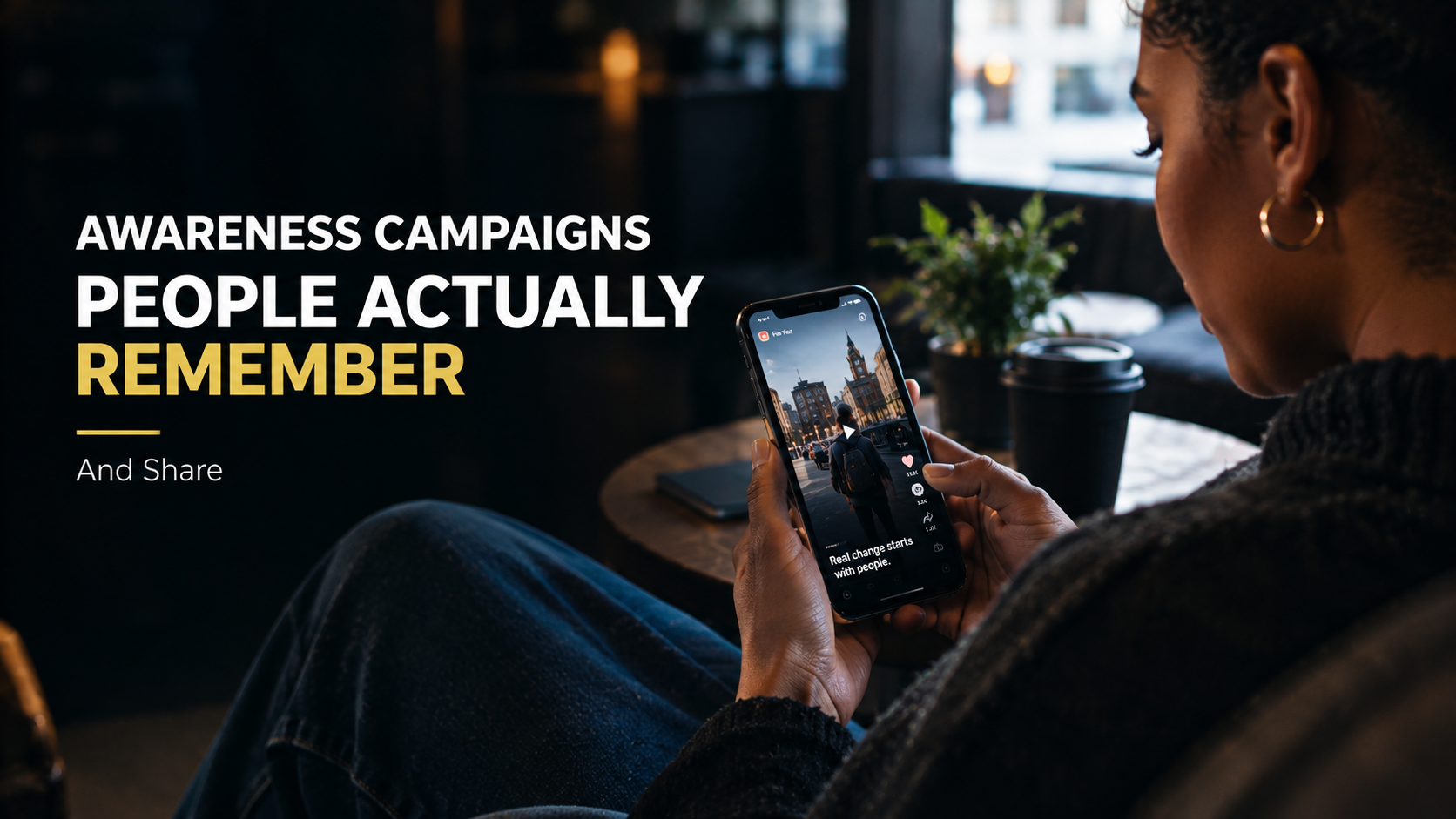
awareness campaign video
Most awareness campaigns are made for the people who commissioned them.
The committee likes it. The lawyers approve it. Everyone involved can explain exactly what the campaign is about.
Then it goes live.
And the people whose behaviour actually needed to change scroll straight past it.
That is the problem.
A campaign can be accurate, well-intentioned and beautifully produced and still fail to get noticed.
Because awareness is not the same thing as attention.
The strongest public awareness campaigns understand where their audience spends time, how that audience communicates and what would actually make them change their behaviour.
The formula is surprisingly simple:
The right language. The right platform. The right ask.
What makes a public awareness campaign work?
Start with the behaviour, not the video.
“Be aware of X” is vague.
“Check this one thing before you do X” gives somebody something they can actually do.
That distinction matters because awareness campaigns are ultimately trying to move people from knowing something to doing something.
So before writing a script, choosing a presenter or designing a poster, define the action.
Do you want people to:
Check something?
Stop doing something?
Start doing something?
Contact a service?
Try a different option?
Talk to someone?
Make a safer decision?
Once the behaviour is clear, the creative becomes much easier to build around.
Your audience filters the format before the message
There is a reason people can recognise an “official” advert almost instantly.
The polished voiceover. The formal language. The institutional graphics. The familiar warning structure.
For the audience, those signals can be enough to trigger the skip.
The problem is not necessarily the message.
It is the packaging.
A campaign aimed at a 22-year-old who discovers cosmetic practitioners through Instagram cannot assume that a leaflet, formal explainer or traditional public-service advert will reach them at the moment they are making a decision.
The content needs to behave like something they already choose to watch.
That does not mean dumbing down the message.
It means translating it.
Same facts. Different delivery.
Real people instead of presenters who sound like presenters.
Specific consequences instead of abstract statistics.
A strong opening instead of a long institutional introduction.
And the message needs to earn attention before it asks for it.
The Bolton cosmetic safety campaign: meeting people where the decision happens
Our cosmetic safety campaign for Bolton Council is a good example of this principle.
The issue was straightforward but serious: young people were accessing Botox and other cosmetic procedures from unqualified practitioners, with potentially harmful consequences.
The challenge was reaching people before they made that decision.
A leaflet sitting in a GP surgery was unlikely to be the most relevant format for someone discovering a discounted cosmetic procedure through social media.
So the campaign needed to operate in the same environment as the decision.
That meant social-first video content, using the visual language and pacing of the platforms where cosmetic procedures were being marketed.
The warning was still the warning.
The facts did not become less important.
The presentation changed.
That is what good public-awareness creative does.
It does not hide the message behind entertainment.
It uses the language of the audience to make sure the message actually gets heard.
Real consequences beat abstract warnings
People respond differently when they can understand what something means in real life.
“Unqualified practitioners can be dangerous” is a general statement.
Showing the potential consequences makes the issue much more tangible.
That is why real people can be so effective in awareness campaigns.
A person describing what happened to them.
Someone explaining a decision they wish they had made differently.
A resident showing how a service changed their experience.
A professional explaining one thing the audience should check.
These stories give information somewhere to land.
They also make the campaign easier to remember.
The audience may forget the official name of the campaign.
They may not forget the person who told them something that changed the way they think.
Awareness campaigns do not all need to sound the same
This is where many organisations get it wrong.
They develop a house style and apply it to everything.
Same tone.
Same presenter.
Same graphics.
Same music.
Same structure.
It looks consistent.
It can also make completely different audiences feel like they are being spoken to by the same institution.
A campaign about cosmetic safety aimed at younger social audiences should not necessarily sound like a campaign supporting older people and their families.
The subject changes.
The audience changes.
The emotional context changes.
So the creative should change too.
There is no universal “awareness campaign style”.
There is only the style that makes sense for this audience, this behaviour and this moment.
Sometimes awareness needs dignity rather than alarm
Our Age UK Bolton film about its Hospital to Home service required a completely different approach.
The audience included older people and their families at a potentially vulnerable point in their lives.
This was not a situation for shock tactics or aggressive messaging.
The campaign needed warmth.
It needed reassurance.
It needed to make a support service feel human and trustworthy.
That is an important distinction.
Effective awareness does not always mean making people worried enough to act.
Sometimes it means making people comfortable enough to ask for help.
The creative approach should follow the audience's emotional reality rather than forcing every campaign into the same formula.
Behaviour change works beyond warning campaigns
The same principle applies when the message is positive.
Our Trafford Active Travel campaign was not about warning residents away from something.
It was about encouraging them to consider walking and cycling routes they might not normally use.
The creative challenge was therefore different.
There was no need to frighten people into action.
The campaign needed to make the behaviour feel normal, practical and achievable.
Real residents using real routes helped do that.
Instead of presenting active travel as something reserved for people in specialist cycling gear, the content showed ordinary people doing something ordinary.
That matters.
Sometimes the most effective persuasion is simply showing people that the behaviour already fits into everyday life.
Give people one thing to remember
Awareness campaigns often try to say too much.
There are five statistics.
Three warnings.
Four reasons.
A website address.
A phone number.
A government logo.
A final reminder.
By the end, the audience remembers very little.
A stronger campaign asks:
What is the one thing we want somebody to remember after this video ends?
Build around that.
One behaviour.
One message.
One clear next step.
Everything else should support it.
That does not mean the campaign has to be simplistic.
It means the audience should not have to work out what you want them to do.
Design for the platform, not just the campaignalarm.
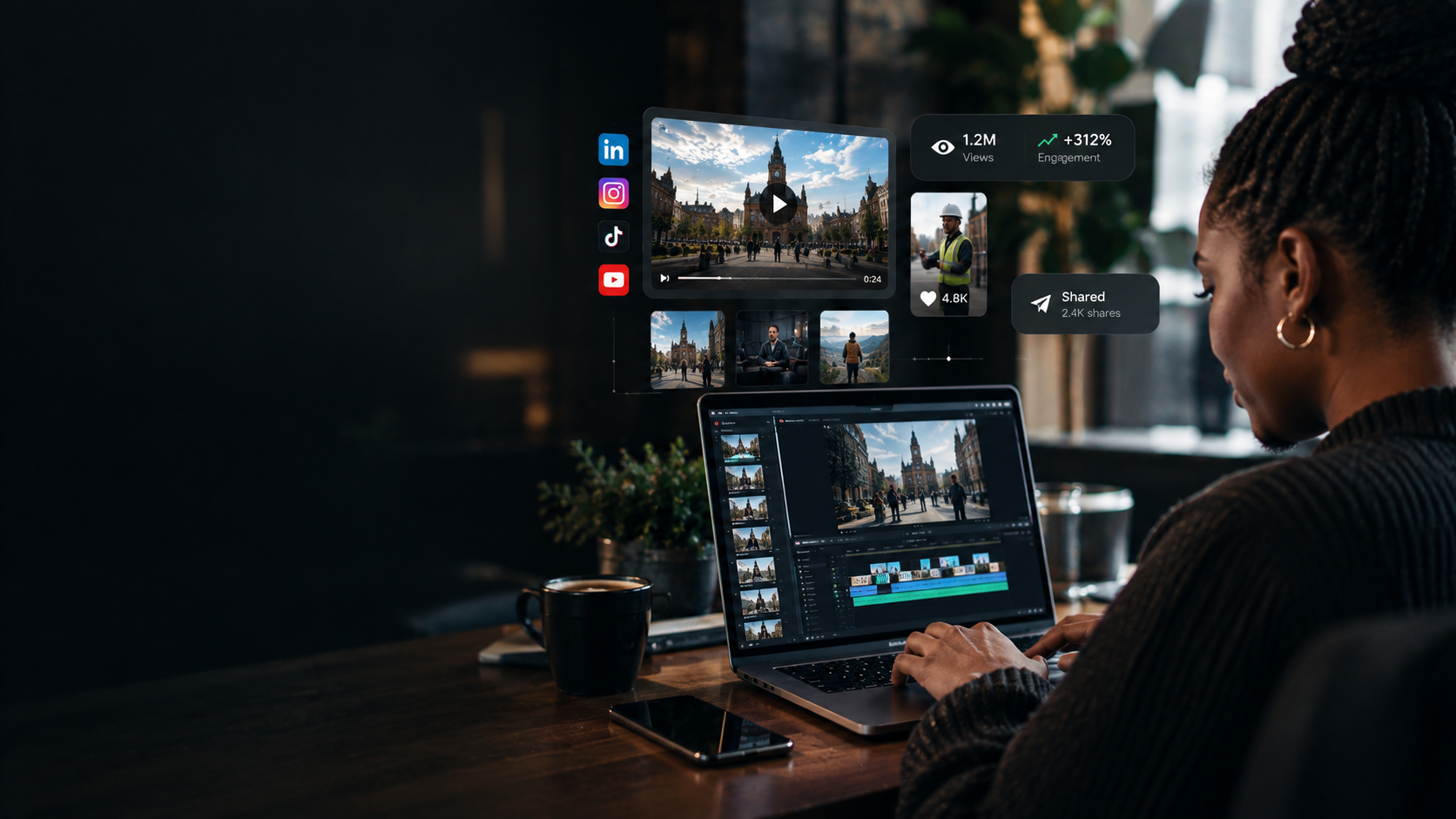
awareness campaign strategy
A video made for television is not automatically a good social video.
A landscape corporate film does not become social content simply because somebody crops it into a square.
The platform affects the creative.
Where is the viewer watching?
How quickly do they decide whether to keep watching?
Are they likely to have sound on?
What does the opening frame look like?
Can the message work vertically?
Can somebody understand the point without sitting through a long introduction?
Can the strongest moment become a standalone clip?
These are production decisions, not things to worry about after the film is finished.
If social is where the audience lives, social needs to influence the film from the beginning.
Measure the behaviour, not just the views
A million views can look fantastic in a campaign report.
But what happened afterwards?
That is the question that matters.
For an awareness campaign, the useful metric might be:
Safety checks completed
Services contacted
Enquiries received
Routes tried
Sign-ups generated
Appointments booked
Information accessed
A specific unsafe behaviour reduced
The right measurement depends on the campaign.
The principle does not.
Choose the behaviour before choosing the creative.
Then build the campaign backwards from the outcome you want.
A campaign reaching 50,000 people who can actually take the desired action may be more useful than one reaching a million people who were never part of the intended audience.
Reach matters.
Relevance matters more.
Make content people would choose to watch
There is a useful test for any awareness campaign:
If this did not have a council, government department or public organisation behind it, would the audience still watch it?
If the answer is no, the creative probably needs another look.
That does not mean every campaign needs to be funny, trendy or disguised as entertainment.
It means the content needs to respect the audience's attention.
Tell a real story.
Show a real consequence.
Use language people actually use.
Start with something worth hearing.
Make the visual style appropriate to the platform.
Then give the audience one clear thing to do.
That is how an official message stops feeling like an official message and starts feeling like useful content.
The campaigns people remember are the ones that feel made for them
The best awareness campaigns do not talk at people.
They understand them.
They know where the audience is.
They understand what the audience cares about.
They know what might make someone stop scrolling.
And, most importantly, they know what behaviour needs to change.
That is why effective awareness content can look completely different from campaign to campaign.
A cosmetic safety campaign may need urgency.
An active travel campaign may need optimism.
A Hospital to Home film may need warmth and reassurance.
Different audience. Different problem. Different creative language.
Same objective:
Make the message matter enough for someone to do something with it.
That is the difference between producing awareness content and producing a campaign people actually remember.
If you are planning a public awareness, behaviour-change or community campaign, explore Title Productions' work, see our wider production services, or contact the team to discuss your campaign.