
Selling a Development That Doesn’t Exist Yet: Vision Films for Property and Regeneration
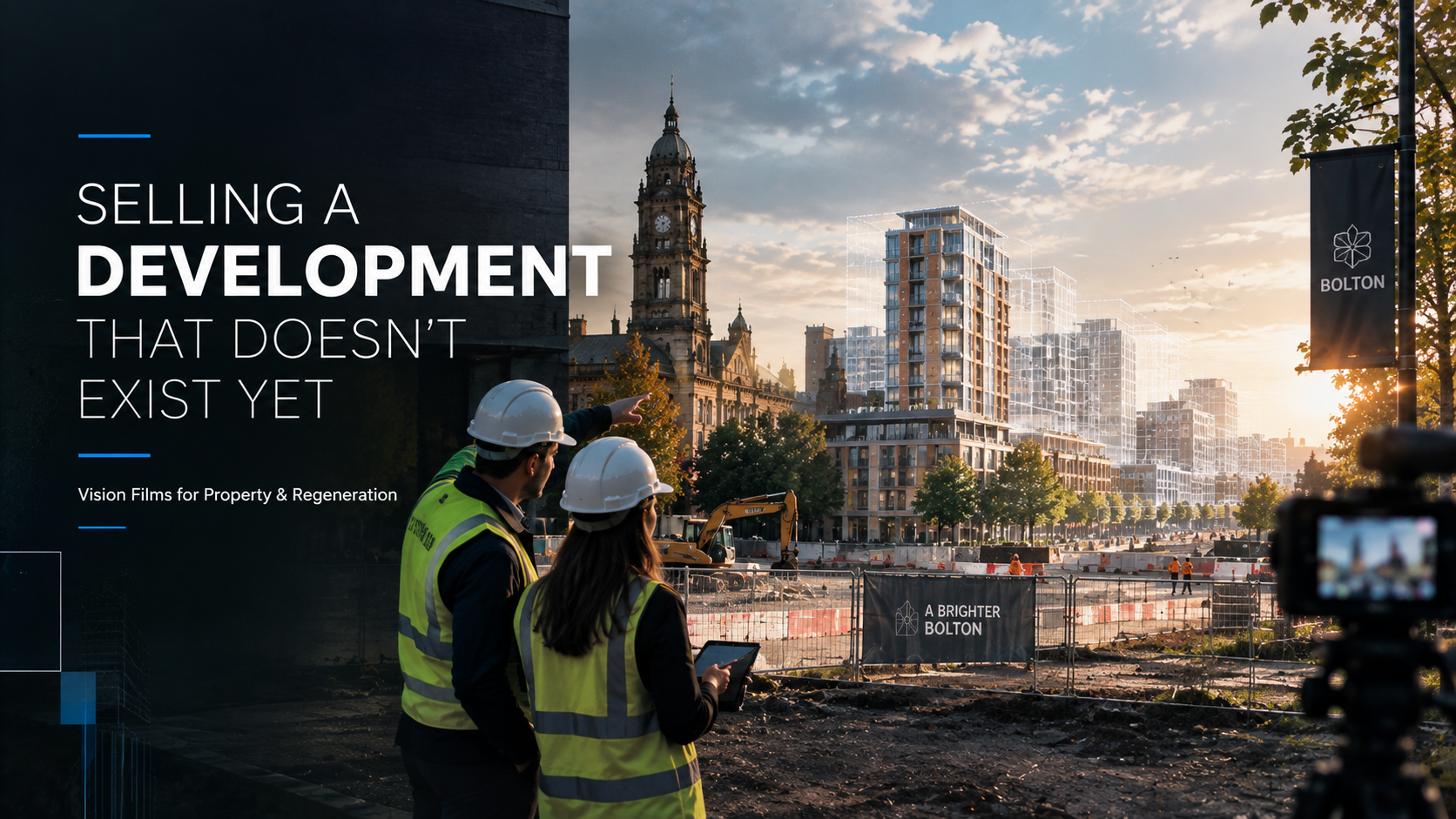
Selling a Development That Doesn’t Exist
There is an awkward problem with selling property before it exists.
There is no finished building to photograph. No lobby to walk through,
no master plan, no residents to interview. Sometimes there is little more than a car park, an empty site and a laminated master plan.
Yet you are asking investors to fund it, buyers and tenants to commit to it, planners to assess it and the public to support it.
So how do you market something that has not been built?
You make the future visible.
That is the job of a strong property development vision film.
A masterplan asks people to imagine.
A vision film does some of that imagining for them.
How do you market a development that hasn’t been built?
Start with what already exists.
Film the location. Show the town. Capture the surrounding businesses, streets, transport links and people. Explain the demand behind the scheme and introduce the team responsible for delivering it.
Then bring in the future.
Architectural CGI, animation and visualisation can show what the development could become. Real footage gives those visuals context.
That combination is important.
A film made entirely from CGI can feel detached from reality. It may look impressive, but the audience is still watching a concept.
A film made entirely from interviews and planning documents can struggle to create excitement.
The strongest vision films connect the two.
The real footage shows where the development belongs. The CGI shows what could happen there. The people explain why it matters.
A masterplan shows the project. A film shows the opportunity.
Property development is full of numbers.
Investment values. Housing figures. Job projections. Floor space. Phasing. Completion dates.
All of them matter.
But numbers on a slide can be surprisingly difficult to picture.
Take a major regeneration scheme. A £250 million investment figure might sound significant, but it remains abstract until you understand what that investment actually means for a place.
Film can connect the number to something tangible.
Show the site.
Show the surrounding streets.
Show the people and businesses that already exist there.
Then show the proposed transformation.
The audience starts to understand not just what is being built, but what changes because it is built.
That is a much stronger story.
Keep the real location at the centre
One of the easiest mistakes with development films is allowing the CGI to take over completely.
But the existing location is part of the story.
The “before” gives the “after” meaning.
Film the streets as they are now. Show the businesses, buildings and spaces that will be affected. Establish how people currently experience the area.
Then introduce the proposed development.
That contrast gives the audience something to understand rather than simply something attractive to look at.
It also keeps the film grounded.
The CGI may show the finished vision, but the real footage proves that the vision belongs to a particular place.
People make the vision believable
Technology can show what a development might look like.
People explain why it matters.
A local business owner can talk about footfall.
A project leader can explain the opportunity.
A council representative can put the wider regeneration strategy into plain English.
A community voice can explain what people want from the area.
These voices stop the film becoming a CGI showreel.
Because regeneration is ultimately about more than buildings.
It is about homes, jobs, businesses, public spaces, investment and what happens to a place when the development is complete.
The buildings are the visible part.
The human impact is the story.
One vision film can serve several audiences.
A development does not have one audience, so the film should not have one job.
Investors
Investors need to understand the opportunity, the proposition and the people behind the delivery.
The film should make the development easier to understand and easier to communicate internally.
Buyers and tenants
They need to picture themselves using the finished space.
What will it feel like to live there, work there or spend time there?
The CGI matters, but so does everything around it.
Planners and the public
For communities, the immediate experience of a development can be disruption.
Construction. Traffic. Demolition. Change.
The promised benefits can feel much further away.
A good vision film helps make those benefits tangible while remaining honest about the scale and timeline of the project.
The press
There is another useful audience: journalists.
Good-quality development footage can become part of news coverage, social content and wider media reporting.
That gives the original production another life.
One well-planned shoot can provide the main vision film, shorter social edits, interview clips, presentation footage and press assets.
Turning big regeneration numbers into something people can see
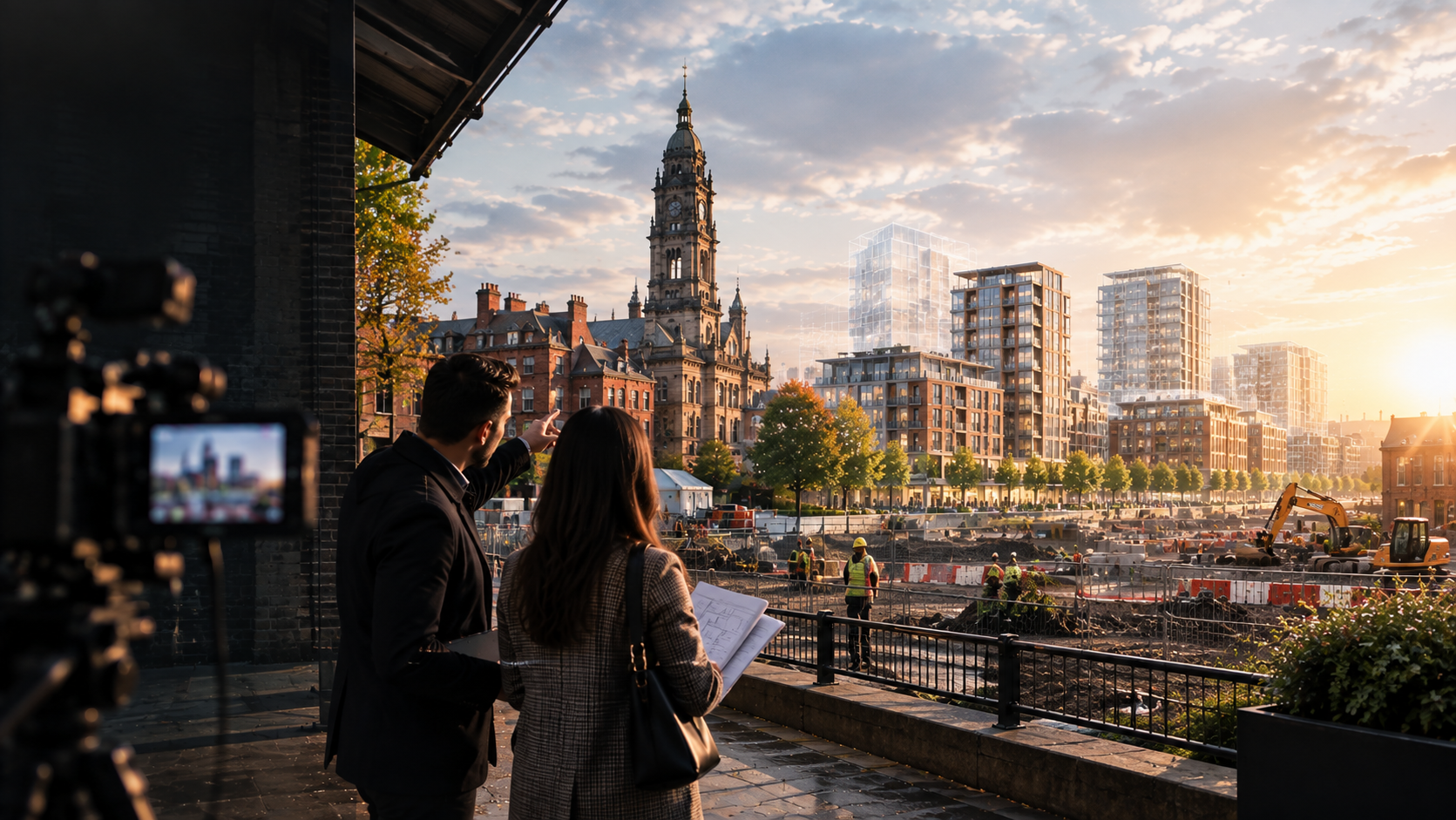
Bolton work
This is particularly useful for place-marketing and regeneration campaigns.
regeneration,
The campaign told the story of a reported £1.5 billion investment pipeline, including major projects such as the £250 million Crompton Place transformation, Hexagon Park and its projected 6,000 jobs, and NorthFold's plans for 9,000 homes.
Those figures are substantial, but figures alone do not tell a visual story.
Film connects them to real locations, proposed developments and the people involved.
Instead of simply hearing about investment, the audience can see where that investment is intended to go.
That makes the story easier to understand, remember and communicate.
Don't oversell the future.
There is a temptation to make an unbuilt development look completely finished.
Every tree is mature. Every public space is busy. Every apartment looks perfect.
It looks impressive.
But if the project will take ten years to complete, making it appear finished next year can damage credibility.
Strong vision films are ambitious without pretending the future has already arrived.
Be clear about what is proposed.
Be honest about timelines.
Distinguish between confirmed plans and visualisations.
A development can be exciting without being exaggerated.
In fact, that balance is often what makes the vision more believable.
When should you make the film?
Earlier than many developers think.
The funding and pre-planning stages are often when belief in the project is most important and physical evidence is hardest to provide.
A vision film can help communicate the opportunity before construction begins.
Then, as the development progresses, the story can evolve.
Ground-breaking?
Film it.
First phase completed?
Film it.
First tenants arrive?
Film it.
First residents move in?
Film it.
The original vision becomes the beginning of a visual record showing the project moving from proposal to reality.
That visible momentum can then be reused across investor presentations, websites, social media, press coverage and stakeholder communications.
Build one production around multiple pieces of content
The mistake is treating a vision film as a single two-minute deliverable.
A properly planned production can create a whole content library.
The main film can be supported by:
Short investor edits
Social media videos
Interview clips
Press footage
Website content
Presentation assets
Milestone updates
That makes the production useful long after the launch film has been published.
It also gives a long-term development project a consistent visual identity from the beginning.
What separates a vision film from a CGI showreel?
People and place.
That is the difference.
CGI shows what could be built.
Real footage shows where it will be built.
People explain why it matters.
The aim is not to make an unbuilt development look as though it already exists.
The aim is to make the future understandable, believable and worth caring about.
And yes, use the drone
There is nothing wrong with a great aerial shot.
For large developments, drone footage can communicate geography, scale and connectivity almost instantly.
Just don't confuse a spectacular drone shot with a development strategy.
The drone shows us where the project is.
The story needs to explain why it matters.
The real product is belief
You are not really selling a building that does not exist yet.
You are selling confidence in the opportunity behind it.
Confidence that the development can be delivered.
Confidence that people will want to live, work or invest there.
Confidence that the scheme will contribute something meaningful to the place around it.
A strong vision film gives that belief something tangible to attach itself to.
It takes the master plan off the page, connects the future to the present and gives investors, buyers, communities, and the media a story they can actually see.
Because when the building does not exist yet, the story has to do some of the building.
If you are developing a property, regeneration or investment campaign and need to turn the vision into something people can see, explore Title Productions' work, our production services or get in touch with the team.